О чём книга «Dead Men's s Boots»
Dead Men's s Boots — книга автора Mike Carey. Жанры: Фэнтези, Городское фэнтези. Описание, жанры и похожие книги на Chitat.online.
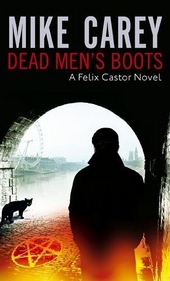
Dead Men's s Boots — книга автора Mike Carey. Жанры: Фэнтези, Городское фэнтези. Описание, жанры и похожие книги на Chitat.online.
Эта страница Chitat.online посвящена книге «Dead Men's s Boots»: читатель видит описание, автора, жанры и может сразу перейти к чтению полной версии в браузере.
Dead Men's s Boots — книга автора Mike Carey. Жанры: Фэнтези, Городское фэнтези. Описание, жанры и похожие книги на Chitat.online.
После карточки книги можно перейти к другим произведениям автора, близким жанрам, сериям и тематическим подборкам.
читать текст Mike Carey Легкое чтение Фэнтези Городское фэнтези подборки серии
Dead Men's s Boots — книга автора Mike Carey. Жанры: Фэнтези, Городское фэнтези. Описание, жанры и похожие книги на Chitat.online.
Используйте жанры, блок похожих книг, другие произведения автора и тематические подборки ниже на странице.
Проверьте описание, автора, жанры, дату выхода и соседние книги: это помогает понять, подходит ли произведение под ваш запрос.
We walked along more miles of eight-lane corridor, up a staircase that wasn’t the one I’d seen in the front hall, and into a bedroom that looked more like a hospital ward. Mostly that was the bed, which was one of those electrically controlled multi-position efforts for people with mobility problems. But I also noticed the pharmacopoeia of pill packets and medicine bottles on a night table next to the bed, the oxygen cylinder discreetly positioned along one wall and the flotilla of wheelchairs parked just inside the door: motorised and manual, folding and solid, solid steel and lightweight aluminium, something for every occasion. In other respects it resembled a child’s nursery: there were toys on the floor, including an ancient-looking Hornby train set with a perfect circle of track, and a bookcase full of very big books with very brightly coloured spines.
Kim – the nurse I’d seen earlier – was adjusting the bed as we walked in. Lionel Palance was lying back on the high-banked pillows, breathing through a nebuliser which a second nurse, a male one, held to his face. His gaze passed over me without seeming to register me at all, but as it rested on Covington he smiled. His lips moved and made a muffled noise that might have been a greeting.
‘Hello, Lionel,’ Covington said gently, sitting on the bed. ‘Taking your medicine. That’s what I like to see.’
The nurse took the nebuliser away and laid it down on the night table.
‘Peter,’ the old man said, in his high, fragile voice. And then, ‘Taking – my my medicine.’
Covington nodded, pantomiming approval. ‘Yeah, I saw. And Kim’s going to read to you until you go to sleep. The Just So Stories, yeah? You’re still on that one?’
‘Noddy,’ Kim murmured. ‘We’re back to Noddy.’
Covington winced. ‘Noddy’s too young for him,’ he said, with an edge in his voice, as though they were parents disagreeing for the thousandth time about a child they had ambitions for.
Kim wasn’t cowed. ‘But he likes it,’ she said. ‘It comforts him.’
Covington raised his hands in surrender, I think more because I was there than because he accepted the argument.
‘Anyway,’ he said, ‘you’re going to have your story and you’re going to go to sleep, aren’t you? You’re going to be good now.’
‘All right, Peter,’ the old man agreed.
‘Goodnight, Lionel. God bless. See you in the morning, please God.’
He recited this quickly, as though it was a formula.
‘Goodnight, Peter,’ the old man fluted. ‘God bless. See you in the morning. Please God.’
Covington stood up and made to move away, but the old man was still looking at him, still trying to speak although he’d temporarily run out of breath.
‘We played hi- hide and seek.’
The big blond hunk turned around and looked down at his nominal employer who was dwarfed by the ultra-technological bed as he was by the ultra-luxurious house. Something in Covington’s face changed and for a moment he looked as though he’d taken a punch to the jaw. He blinked twice, the second blink longer than the first. His eyes when they opened again were wet.
‘Yeah,’ he said, with an effort. ‘We did, Lionel. We played.’
Covington walked out of the room quickly, without looking at me. I lingered, listening to the silence. Not really silence: Lionel Palance’s breathing was hoarse and hesitant and clearly audible, and the two nurses were bustling off to one side of me, Kim stacking the medications back in the right places on the table while the male nurse bundled up the old man’s soiled pyjamas and put them in a plastic laundry bin. Something beeped in a vaguely emergency-room tone, but I couldn’t see what or where it was.
Not really silence: but then I wasn’t really listening, at least to any of that stuff. I was listening to Lionel: to the rhythm of his soul and self, the music I’d play if I ever wanted to summon him or send him away.
It was very faint, but it was there. More to the point, it was right: the key and the tone and the chords and the pace and the nuance all felt like they belonged there. He was himself: not a ghost riding flesh it had no claim to; not a demon playing with a meat puppet. Just a frail old man living out his last days in a second childhood, surrounded by all the luxuries that money could buy.
And yet he was part of all this: part of whatever was happening at Mount Grace. How could he not be, when he was the owner of the place? Covington had said that Palance hadn’t had anything to do with the crematorium for more than a decade: but we were looking at events that had played out over more than a century, so a few years more or less were no more than a drop in» th fo the ocean.
I couldn’t question Palance, obviously, and it looked like I’d got all I was going to get from Covington.