О чём книга «Dead Men's s Boots»
Dead Men's s Boots — книга автора Mike Carey. Жанры: Фэнтези, Городское фэнтези. Описание, жанры и похожие книги на Chitat.online.
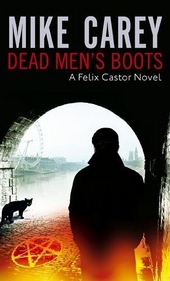
Dead Men's s Boots — книга автора Mike Carey. Жанры: Фэнтези, Городское фэнтези. Описание, жанры и похожие книги на Chitat.online.
Эта страница Chitat.online посвящена книге «Dead Men's s Boots»: читатель видит описание, автора, жанры и может сразу перейти к чтению полной версии в браузере.
Dead Men's s Boots — книга автора Mike Carey. Жанры: Фэнтези, Городское фэнтези. Описание, жанры и похожие книги на Chitat.online.
После карточки книги можно перейти к другим произведениям автора, близким жанрам, сериям и тематическим подборкам.
читать текст Mike Carey Легкое чтение Фэнтези Городское фэнтези подборки серии
Dead Men's s Boots — книга автора Mike Carey. Жанры: Фэнтези, Городское фэнтези. Описание, жанры и похожие книги на Chitat.online.
Используйте жанры, блок похожих книг, другие произведения автора и тематические подборки ниже на странице.
Проверьте описание, автора, жанры, дату выхода и соседние книги: это помогает понять, подходит ли произведение под ваш запрос.
I didn’t believe in the bodily resurrection. All my life I just did what I had to do to get by, and that never seemed to leave much room for thinking about God. The last time I went to schul was on the day I was bar mitzvah. Three years after that I killed my first man. Probably the one thing had as much to do with growing up as the other did.’
Suddenly the prospect of hearing all this seemed a lot less attractive. ‘So you were a bad man,’ I said. ‘We can take that as read, if you like. Move on to the atonement and the absolution.’
‘I’ve been handling the atonement in my own sweet way, Castor. And for your information, I haven’t started telling you my sins yet. I don’t think any of the men I killed back when I was Aaron Silver had any reason to complain. They would have done the same to me, if I’d given them an opening. One of them did, in the end. Henry Meyer-Lindeman got the drop on me in a whorehouse in Streatham. Actually on the job. Shot me and shot a lady name of Ginny Tester under me. We both died instantly.’
‘And in your end was your beginning.’
Covington grimaced. ‘Not right away. It was a shock – waking after my own death and finding that I was trapped in Mount Grace. Tied to my own ashes. You never really are, of course. The trap is just your own habits. Your own ways of thinking. But it felt real. It felt as though I’d be spending eternity on that one little plot of ground, and eternity would be a long time passing.
‘But a year later Stephen Kesel died, and he felt the same way about burial as I did. And four years after that it was Rudolf Gough’s turn. And that was critical mass. There was an old janitor who used to live on the site. We took him one night while he was asleep: the three of us, working together. Then we took turns to ride him. We were back in business.
‘The first thing I did was to visit Meyer-Lindeman and pay him back with interest. I liked Ginny Tester a lot: she deserved better than to die in that undignified way. And Steve and Rudy had similar visits to make – good ones and bad ones.
‘But we realised pretty quickly that this went beyond dealing with unfinished business. We also figured out that it wasn’t possible for one of us to betray the others: Steve tried to take off on his own, but he came limping back three days later: the janitor was fighting back, and it took the three of us to whip him into line again.
‘So there we were. We were immortal, but only so long as we stuck together. An immortality collective. Till death us do part, only it never could whether we wanted it to or not.
‘All the rules and refinements came over the next twenty years or so – the years of throwing things against the wall to see whether or not they stuck. Experimentation and refinement. We discovered that the ashes made everything ten times easier, and made the possession stick for longer too. We discovereëo. k. d that night was better than day, particularly for the initial breaking-in of a new body, and that dark of the moon was the best time of all. We turned it into a very streamlined process. Tried and tested. It helped that nobody believed what we were doing was even possible: that meant nobody was on their guard.’
‘What about Myriam Kale?’ I asked. ‘Where does she come in?’
For a moment I thought Covington hadn’t heard me. He was looking up at the ceiling, his posture one of acute attention.
‘Did you hear Lionel crying?’ he demanded.
‘I didn’t hear a thing.’
He relaxed a little. ‘Okay. Just the wind, I guess. I picked this room because it’s right under his: if he stirs, we’ll hear him. You’ll notice I sent the nurses away, so I’m . . . on duty tonight. Myriam, right. Myriam was Yoko Ono. The femme fatale who gets the blame for breaking up the band.’
He took another long swig of whisky. He’d been drinking pretty regularly and pretty determinedly at every pause in the conversation and the bottle was mostly empty now. He was nerving himself up for something, but I wondered whether he might already have missed his stop.
‘By the 1960s,’ Covington said, ‘I was in my eighth body, if you can believe that. We wore them out pretty quickly: the psychic punishment is reflected in premature ageing. Our numbers were up to two hundred, which is where they’ve stayed ever since, and we’d already had the idea of moving out of organised crime into legitimate business – things that would make us just as rich, but at the same time lessen the chance of any police investigation finding us by accident.
‘For me, it was getting . . . claustrophobic. I wasn’t enjoying the company of my peers much at all. And I’d been practising meditation techniques: I found that if I was really disciplined I could maintain control of the body I was in more or less indefinitely, without reinscription.