О чём книга «Thicker Than Water»
Thicker Than Water — книга автора Mike Carey. Жанры: Фэнтези, Городское фэнтези. Описание, жанры и похожие книги на Chitat.online.

Thicker Than Water — книга автора Mike Carey. Жанры: Фэнтези, Городское фэнтези. Описание, жанры и похожие книги на Chitat.online.
Эта страница Chitat.online посвящена книге «Thicker Than Water»: читатель видит описание, автора, жанры и может сразу перейти к чтению полной версии в браузере.
Thicker Than Water — книга автора Mike Carey. Жанры: Фэнтези, Городское фэнтези. Описание, жанры и похожие книги на Chitat.online.
После карточки книги можно перейти к другим произведениям автора, близким жанрам, сериям и тематическим подборкам.
читать текст Mike Carey Легкое чтение Фэнтези Городское фэнтези подборки серии
Thicker Than Water — книга автора Mike Carey. Жанры: Фэнтези, Городское фэнтези. Описание, жанры и похожие книги на Chitat.online.
Используйте жанры, блок похожих книг, другие произведения автора и тематические подборки ниже на странице.
Проверьте описание, автора, жанры, дату выхода и соседние книги: это помогает понять, подходит ли произведение под ваш запрос.
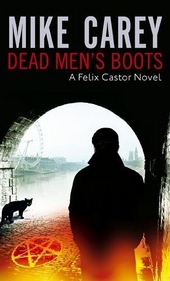
The advantages to this ‘write what you know’ approach are obvious, but have you found any pitfalls to writing Castor’s history so much in line with your own?
Yes! In Thicker Than Water, the fourth novel, I take Castor back to Liverpool. There’s a lot about his parents there, a lot about his brother Matthew, a lot about his relationships with other kids he knew in Walton. Without going into detail, there were whole chapters there that I wrote and then cut out because I realised after I’d written them that they were (a) confessional and (b) cathartic. They were there for me, not for the reader, and they just had to go. I also had to change some details for more mundane reasons, to avoid getting punched in the face the next time I see some of my friends and relatives.
Your take on the supernatural is almost scientific in its logic. Do you think there is a scientific explanation for everything or do you have some belief in the supernatural?
I’m an atheist when it comes to God, but an agnostic when it comes to most supernatural phenomena. Don’t get me wrong, I come at these things from a rationalist perspective - and I’m dead set against the way the rationalist consensus is now under attack by extremists in pretty much every organised religion. But I don’t necessarily see a fixed and unwavering line between the things that science can explain and the things that it can’t. Quantum physics, if you see it from one point of view, looks very much like superstition and mumbo jumbo. I’m a rationalist but not a materialist: I believe in spirit, in a sort of animistic essence that outlives the body, whether or not it can be seen and measured. So I don’t see any reason why the existence of ghosts, for example, offers any kind of affront to a scientific world view. The world is energies as well as objects, and we’re constantly realising that there are some beans we haven’t counted yet. You know, I’d better stop while there are still some metaphors I haven’t mixed.
What advantages and disadvantages do you see in using fantasy as the vehicle for your stories?
I never really had any choice. I don’t think I could write totally realistic fiction, although I’d be curious to try. For me, the spectrum that extends from horror through fantasy to science fiction is where I feel most comfortable and where I wanted to pitch my tent as a writer. Coming back to the previous question, not believing in Heaven doesn’t reconcile me any better to Earth. I’m happiest when I’m cutting off at an odd angle, playing with counter-factual worlds."
"It almost feels to me as though fantasy is a dimension - I mean, in the same way that length and height and breadth are dimensions. My step-father-in-law, Eric, finds it hard to read any fantastic literature because he can’t take that first step of investing belief in the fiction - of accepting its premises. I said to him once ‘so you’re like a guy who loves ice cream, but only ever eats vanilla’. It was a really unfair comparison, but I feel that strongly about the pleasures and experiences that fantasy has to offer. I’d feel like I was living in Flatland if I tried to write something that was wholly realistic.
Do you find it frustrating that so much excellent work is currently being produced in SF and fantasy but that by and large it is still ignored by the literati?
I did, once. I think Philip Pullman and J. K. Rowling between them have done a lot to kick those doors down.
Do you have any particular favourite authors who have influenced your work?
Mervyn Peake. Ursula LeGuin. China Mieville. And in comics, Alan Moore, Neil Gaiman, Grant Morrison. I love and seek out two things: outrageous ideas and a vivid, chewy or elegant written style. The writers I come back to again and again are the ones that seem to me to offer both of those things.
Doû sio m you have a set writing routine and if so, what is it?
I don’t really have a routine in terms of how my working day is structured. I have a core working day, which is from 8.00 a.m. when the kids go to school to 4.00 in the afternoon when they usually come back. Most evenings, though, I’ll go back and do a couple more hours after that. I work weekends - Saturday morning, Sunday afternoon. I discovered a long time ago how easy it is to throw yourself out of the working mood - the zone, whatever you want to call it - and how hard it is sometimes to find it again. But then I realised something else, which is that the times when you’re not working are probably necessary, too: part of the process. I don’t worry so much about taking breaks now, because I know I’ll pay that time back sooner rather than later.
How extensively do you plot your novels before you start writing them? Do you plot the entire trilogy/series before you start writing or do you prefer to let the story roam where it will?
The first two Castor novels were plotted in obsessive detail.