О чём книга «Dead Men's s Boots»
Dead Men's s Boots — книга автора Mike Carey. Жанры: Фэнтези, Городское фэнтези. Описание, жанры и похожие книги на Chitat.online.
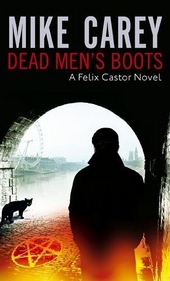
Dead Men's s Boots — книга автора Mike Carey. Жанры: Фэнтези, Городское фэнтези. Описание, жанры и похожие книги на Chitat.online.
Эта страница Chitat.online посвящена книге «Dead Men's s Boots»: читатель видит описание, автора, жанры и может сразу перейти к чтению полной версии в браузере.
Dead Men's s Boots — книга автора Mike Carey. Жанры: Фэнтези, Городское фэнтези. Описание, жанры и похожие книги на Chitat.online.
После карточки книги можно перейти к другим произведениям автора, близким жанрам, сериям и тематическим подборкам.
читать текст Mike Carey Легкое чтение Фэнтези Городское фэнтези подборки серии
Dead Men's s Boots — книга автора Mike Carey. Жанры: Фэнтези, Городское фэнтези. Описание, жанры и похожие книги на Chitat.online.
Используйте жанры, блок похожих книг, другие произведения автора и тематические подборки ниже на странице.
Проверьте описание, автора, жанры, дату выхода и соседние книги: это помогает понять, подходит ли произведение под ваш запрос.
An instant later it cleared, and he was gone.
There was a soft thump as the skull fell onto the carpet and rolled a few inches before rocking back and settling on its apex. The upside-down sockets stared vacantly at me, inviting me into the well within that used to be full to the brim with cat-thoughts and now was full of nothing.
Normal service had been resumed.
Almost in the same instant, the TV set gave an unsettlingly organic shudder and the screen lit up like an eye opening in the dark corner of the room.
‘- Don’t even know where she came from,’ a man’s voice said, sounding strained and almost tearful. The man on the screen was burly, middle-aged, dressed in what I took at first to be a police uniform. He didn’t look prone to tears. ‘She just walked right past the guard post, and we all – three of us – we all ran out after her. I was just thinking how did she get in, because there’s a wall. It’s twenty feet high, and then – there’s an overhang, with razor wire. You can’t climb it. Nobody could climb it.’
The image switched abruptly to an external shot of one of the five wings of Pentonville, and I realised that he wasn’t a cop: he was a prison guard.
‘Nobody else had any clearer explanations to give,’ said a news presenter’s voice in public-solemnity mode, ‘for how a prisoner on remand for murder was able to walk out of one of London’s highest-security prisons, in what was evidently a highly planned and meticulously executed raid. The mystery woman entered here . . .’
I shook my head to clear it, which turned out to be a mistake: the various dull aches in my neck and in the muscles of my face connected up suddenly into an all-singing, all-dancing multimedia extravaganza. On the screen, successive still photos of Pentonville were overlaid with computer graphics mapping a route through a gate, now hanging off its hinges, over an inner wall of impressive height and down through an interior space punctuated with inspection posts Ãspeuteand barred, locked doors. The voice was still talking, but I was momentarily distracted by the pretty pictures.
Another talking head popped up, this time wearing a suit and batting for the Home Office. He denied allegations that staff cuts had played a part in these events. ‘There were plenty of guards on the scene. Three at the first guard post and three more in D wing itself. Two of them were very seriously assaulted – hospitalised. The rest seem to have been exposed to some sort of drug – a nerve gas, or a hallucinogen – and are unable to give a clear account of what happened.’
Cutaway to some hand-held footage of another uniformed guard sitting on the steps of an ambulance with a blanket round his shoulders. He was staring at nothing as cameras flashed all around him.
‘She just looked at me,’ he said. ‘She just – and then – I was – I don’t know. I don’t know. I was so-’ He hid his face in his hands, either trying to evade that remembered gaze or to relive it.
Cut to still image of Doug Hunter: an archive shot of him walking into court, presumably on the day of his remand hearing. His face impassive, closed, giving nothing away.
‘This is the man who walked out of the front gate of Pentonville this evening, leaving the prison and the system it represents in chaos—’
I’d found the remote by this time. Now I found the off switch. Moloch had made his point: Juliet was home, the fewmets had hit the windmill and if time had ever been on my side then it sure as hell wasn’t any more.
I limped through into the bathroom, so overwhelmed with tiredness that I felt like my body had melted and then congealed again as a lump of undifferentiated matter. I splashed cold water in my face, stripping one layer off the exhaustion and revealing a lot more layers underneath.
Try to forget about Juliet, at least for now. What she’d done, terrible though it was, was no surprise – and it was a big silver lining that she’d managed to do it without killing anyone. How long that would last was another question altogether. If she just let Myriam Kale walk away in Doug Hunter’s body after the jailbreak, then it was only a matter of time before Kale met some guy who pushed all the wrong buttons for her. Then there’d be another Alastair Barnard lying in a hotel room somewhere for the maid to find when she came to turn the sheets over.
I couldn’t do anything about that. I probably shouldn’t even try: it would be like aiming the fire extinguisher at the flames, instead of at the base of the fire. Because Myriam Kale was just a symptom of something bigger and older and a lot more terrifying.
Why had I agreed? Why had I decided to dance with the devil? I’d known Asmodeus for long enough to know what kind of moves demons favour and where I was likely to end up after the dance was done. But I didn’t have any choice.