О чём книга «Dead Men's s Boots»
Dead Men's s Boots — книга автора Mike Carey. Жанры: Фэнтези, Городское фэнтези. Описание, жанры и похожие книги на Chitat.online.
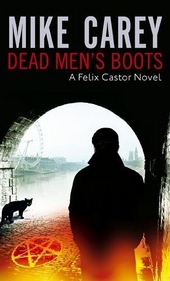
Dead Men's s Boots — книга автора Mike Carey. Жанры: Фэнтези, Городское фэнтези. Описание, жанры и похожие книги на Chitat.online.
Эта страница Chitat.online посвящена книге «Dead Men's s Boots»: читатель видит описание, автора, жанры и может сразу перейти к чтению полной версии в браузере.
Dead Men's s Boots — книга автора Mike Carey. Жанры: Фэнтези, Городское фэнтези. Описание, жанры и похожие книги на Chitat.online.
После карточки книги можно перейти к другим произведениям автора, близким жанрам, сериям и тематическим подборкам.
читать текст Mike Carey Легкое чтение Фэнтези Городское фэнтези подборки серии
Dead Men's s Boots — книга автора Mike Carey. Жанры: Фэнтези, Городское фэнтези. Описание, жанры и похожие книги на Chitat.online.
Используйте жанры, блок похожих книг, другие произведения автора и тематические подборки ниже на странице.
Проверьте описание, автора, жанры, дату выхода и соседние книги: это помогает понять, подходит ли произведение под ваш запрос.
Even if Juliet hadn’t left me in the lurch, Moloch was right about the kind of help we needed: a specialist, adapted to the terrain and the situation by whatever passed in Hell for Darwinian pressures. The forces of supernature.
That left at least one question unanswered. How in the name of Christ and all his bloody saints was I going to hold up my end of the bargain? John Gittings had tried, and he seemed to have an informer on the inside – someone who was writing him briefing notes and giving him tips on strategy. Take back-up: take lots of back-up. Exactly what Covington had advised me to do – and exactly whaÃandes t John had been calling me to arrange. Me, and maybe Stu Langley too. But I didn’t pick up, Stu Langley got himself a fatal concussion and John had had to go in alone.
I stared at myself in the bathroom mirror, water pouring down my battered face and dripping onto my bloody, rumpled shirt. I was looking for cracks in the famous Castor façade, but I saw someone else’s face staring back at me: John’s face, from my dream on the night before the cremation. What had he said to me? That he was supposed to give me something. And when I told him I’d already found the letter inside the pocket watch, he’d shaken his head as though that didn’t matter at all.
‘Not the letter. The score. The final score, after the whistle blew.’
‘The whistle?’
‘Or the drums. I forget. It’s like a skeleton, Fix. The skeleton of a song.’
Maybe I had some back-up already: maybe John could pitch in for me in just the way I’d refused to do for him.
Feeling slightly light-headed, I went back into the living room and rummaged around under the sofa cushions – my favoured location for all flat valuables – until I found the sheet music I’d taken from the left-luggage locker at Victoria. I took it over to the table, laid it down and smoothed out the worst of the creases.
The skeleton of a song. I hadn’t even bothered to try to work out what that meant: begging to differ from Sigmund, I’d never believed that dreams were the royal road to anywhere very much. But John was a drummer, and drummers are different from normal people. The skeleton of a song: not what was left when the substance of the song had rotted away, but the framework, the scaffolding, on which the rest of the song could be built.
That might be how a drummer felt about rhythm.
The notations on the sheet music were as opaque to me now as they had been when I’d first seen them: vertical flecks of ink densely but as far as I could see randomly spaced across the lines of the stave and the width of the page. Occasionally a few marks interspersed that might have been letters or symbols: a vertical line with a horizontal slash near the top that could be a ‘T’ or a plus sign; another that looked like a crude asterisk. Nothing to indicate how any of it fitted together or how it could be translated into sound.
Part of the problem was that I could never be arsed with reading sheet music even when I was trying to learn my own instrument: I picked out tunes in a rough-andready way, already listening more to whatever was going on in my head than to anything else. So now I didn’t even have much to compare this gibberish with.
If I was going to have a hope in hell of deciphering it, I was going to need an expert.
I picked up the phone and dialled from memory. Got some irate old man out of bed because I was one step away from falling over and my thread-stripped brain transposed two digits.
Tried again.
‘Hello?’ A woman’s voice, fuzzy with sleep.
‘Louise?’ I said.
The same voice, a little sharper. ‘Yeah. Who’s this?’
‘Felix Castor.’
‘Fix. Fuck your mother, look at the goddamn time. Are you on something?’
‘What’s the name of your band, Lou?’
‘My band?’ she echoed with pained incompÃh pem""rehension.
‘You still play, right?’
‘Yeah.’
‘So what’s the name of-?’
‘The Janitors of Anarchy. Fix, you didn’t call me up in the middle of the night to ask—’
‘No,’ I interrupted her, ‘I didn’t. I just want to meet the drummer.’
21
His real name was Luke Pomfret, Louise had said, but he played under the assumed splendour of Speedo Plank. I’d arranged to meet him at noon, allowing a generous seven hours for restorative unconsciousness. When I woke up, my head banging and my throat feeling like someone had tamped a couple of bagfuls of silica down into it, it was one-thirty. I called Louise again, getting a livelier and more varied torrent of abuse this time because she was properly awake. I apologised profusely, swore to God and a bunch of other guys that I’d never pull this shit on her again, and got her to call up Mister Plank and reschedule.
Then I called Juliet’s house, but it was Susan who picked up. She sounded cheerful enough until I told her where I was and asked her if she’d heard from her other half.