О чём книга «Dead Men's s Boots»
Dead Men's s Boots — книга автора Mike Carey. Жанры: Фэнтези, Городское фэнтези. Описание, жанры и похожие книги на Chitat.online.
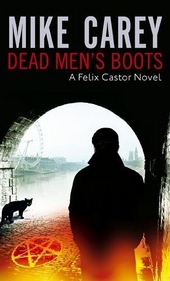
Dead Men's s Boots — книга автора Mike Carey. Жанры: Фэнтези, Городское фэнтези. Описание, жанры и похожие книги на Chitat.online.
Эта страница Chitat.online посвящена книге «Dead Men's s Boots»: читатель видит описание, автора, жанры и может сразу перейти к чтению полной версии в браузере.
Dead Men's s Boots — книга автора Mike Carey. Жанры: Фэнтези, Городское фэнтези. Описание, жанры и похожие книги на Chitat.online.
После карточки книги можно перейти к другим произведениям автора, близким жанрам, сериям и тематическим подборкам.
читать текст Mike Carey Легкое чтение Фэнтези Городское фэнтези подборки серии
Dead Men's s Boots — книга автора Mike Carey. Жанры: Фэнтези, Городское фэнтези. Описание, жанры и похожие книги на Chitat.online.
Используйте жанры, блок похожих книг, другие произведения автора и тематические подборки ниже на странице.
Проверьте описание, автора, жанры, дату выхода и соседние книги: это помогает понять, подходит ли произведение под ваш запрос.
The feeling of resistance was growing now that we were inside the building: the cold water was up above my waist and it was congealing into ice, counteracting the fever heat that Juliet had gifted me with. I became aware, without knowing exactly when it had started, of a noise almost beyond the limits of hearing: an atonal skirl that was picking at the stitches of my skein of music, undoing the spell I was trying to weave by infinitesimal increments.
The last time I’d walked down this hall it had seemed barely twenty paces long. It seemed a lot longer now, and every step added to the distance rather than taking away from it. One. Two. Three. Perspective bowed and buckled: space surrendered, haemorrhaged. I raised my left foot and felt the agonised pause, the gap in time before it fell again, as a hole in the music through which my own mind was starting to bleed out. Seven. Eight. I was trudging along a subway tunnel, the air closing in, the ground pulling away and away into unfathomable distance.
Nine.
The mosquito whine of unheard voices enfolded me. I knew them for what they were: the unsepulchred dead, defending their inner sanctum with the single-minded viciousness that had been their hallmark in life. I could even distinguish the different voices in the insect chorus as my death-sense kicked in like passive radar, analysing and identifying the cold, cruel intelligences that were bent on killing ãenticeme.
Up ahead of me, Moloch stumbled, but my perceptions were so attenuated that he seemed to do it in slow motion. Another security guard was standing at the doors of the chapel, a handgun in his fist aimed at Moloch’s torso, his finger pumping the trigger. Ragged holes blossomed in the taut black leather stretched across Moloch’s back, and green ichor flowed from them like tears: incidental details, both to me and to him. But the air was thickening and curdling around the demon’s head and shoulders, the evil dead rallying to keep him out. He slowed, his head bowing under an invisible weight.
I felt that weight too. The tenth step was going to be my last: my foot was coming down as heavy as a sack full of spanners and I doubted I’d have the strength to lift it up again. And even if I did, what then? Another step, and another, like Sisyphus’s boulder, with nothing more to show for it than another yard gained: a slight shift in position that would be more than offset by the endless organic growth of the hallway. Better to stop and rest, and see what came next. Maybe nothing. Nothing would be good.
Moloch was reaching out with both hands towards the man who was shooting him, again and again, in the chest: but the demon was groping like a blind man, and like mine his feet were rooted to the spot. I understood the blindness, dimly: something foul was silting in my head too, swallowing up my faltering concentration in its feculent, liquid depositions, piling up behind my eyes like mud on a river bed.
I found myself drawing out the note that was in my mouth into a sighing out-breath that had nowhere to go but down. I had no idea what would follow it. It was hard even to care. My mind was a slender filament of light and the filament was flickering, stuttering, stop start stop.
Juliet saved me – Juliet and our rough-andready timing. There was another apocalyptic crash from outside that shook the foundations of the building, and simultaneously my consciousness bobbed to the surface again, yawing and pitching so that the world lurched drunkenly around me and I almost fell to my knees. The hypersonic whine in my ears dropped a notch and became a hollow, keening moan.
Moloch laughed, harsh and triumphant.
Outside, although I couldn’t see it, I knew that Juliet had just piloted the bulldozer, blade lowered and ready, through the picturesque glades and paths of the garden of remembrance. Funeral urns were exploding like ripe fruit under the caterpillar tracks, spilling dry and ancient dust into the hungry wind. And feeling their earthly tabernacles defiled, feeling the other wind that blew from eternity plucking at them million-fingered, the dead men were afraid. They faltered in their attack, because they hadn’t expected to be counter-attacked in such a viciously intimate way. It was the advice that John had passed on to me inside the case of the pocket watch, as they’d been passed on to him by his mysterious informant: Remember you can still threaten them. Physically, I mean. If you pull your foot back to kick, a man is going to cover his balls. I hadn’t realised what that meant until Todd had told me that he and his dead pals used their own ashes as the medium of transference when they leapfrogged into new bodies. That was when I saw the rough outline of what we’d have to do. And when we got to the building site, and Moloch found the keys to the bulldozer in the site hut inside a safe whose walls were barely three inches thick . . . well, it seemed like destiny.