О чём книга «Dead Men's s Boots»
Dead Men's s Boots — книга автора Mike Carey. Жанры: Фэнтези, Городское фэнтези. Описание, жанры и похожие книги на Chitat.online.
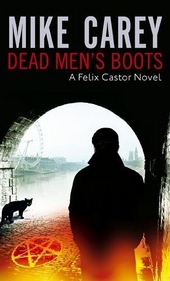
Dead Men's s Boots — книга автора Mike Carey. Жанры: Фэнтези, Городское фэнтези. Описание, жанры и похожие книги на Chitat.online.
Эта страница Chitat.online посвящена книге «Dead Men's s Boots»: читатель видит описание, автора, жанры и может сразу перейти к чтению полной версии в браузере.
Dead Men's s Boots — книга автора Mike Carey. Жанры: Фэнтези, Городское фэнтези. Описание, жанры и похожие книги на Chitat.online.
После карточки книги можно перейти к другим произведениям автора, близким жанрам, сериям и тематическим подборкам.
читать текст Mike Carey Легкое чтение Фэнтези Городское фэнтези подборки серии
Dead Men's s Boots — книга автора Mike Carey. Жанры: Фэнтези, Городское фэнтези. Описание, жанры и похожие книги на Chitat.online.
Используйте жанры, блок похожих книг, другие произведения автора и тематические подборки ниже на странице.
Проверьте описание, автора, жанры, дату выхода и соседние книги: это помогает понять, подходит ли произведение под ваш запрос.
There were a couple of Cabinet ministers in there for starters, along with a Radio 4 presenter, the head of a major union and the CEOs of three companies even I’ve heard of.
But the biggest surprise wasn’t any of those. It was another name entirely that sent me on my travels to the top end of the Northern Line, five days after all this shit had hit the fan and when the echoes had already started to fade.
Court number one at Barnet had a full docket that morning: I didn’t bother to look at the details, but summary justice was scheduled tûwasem""o be meted out to an impressive number of people. Never mind the quality, as the saying goes: feel the burn.
I sat at the back of the court, making myself as inconspicuous as I could, but something was throwing the Honourable Mister Montague Runcie off his honourable stride. He wasn’t looking in the peak of condition, for one thing: his face was pale and there was a sheen of sweat on his forehead, as though he was hunkered down under about five degrees of fever. And he kept looking over at me at back row centre, getting more and more rattled each time. He fought his way manfully through the first case (a persistent burglar going down for a three-stretch) but he lost the thread of things a bit in the second (non-payment of council tax) and got downright tetchy in the third (bad debt). Finally he called a recess of half an hour and stormed off the bench so quickly that we didn’t have time to stand up and sit down again as the door slammed behind him.
A minute or so after that, the court clerk picked his way casually to the back row and asked me if I’d mind attending his honour in his chambers. I said I’d be delighted, and asked it if was okay if I brought my bronze funeral urn with me: it held the mortal remains of my uncle George, and it was hard for me to be parted from them.
Runcie favoured me with a berserker glare as I walked in, but he had enough presence of mind to dismiss the clerk before he started in on me. I took the opportunity to sit down on the far side of the dignified mahogany barricade that was his desk. Runcie was standing, so rigid with indignation that he was vibrating slightly, like a tuning fork. He really looked unwell: the pallor going beyond ashen into waxy.
‘How dare you play at charades in a court of law?’ he demanded as soon as we were alone, waving a finger at the urn. ‘What’s the meaning of this . . . thing?’
I gave the urn a wipe, because the bronze was a bit tarnished here and there. ‘Well,’ I explained, ‘it’s a mark of respect for the dead, primarily, but it also gives the living a focus for their grief. Otherwise you could just flush your ashes down the khazi and use the money for—’
‘Don’t give me all that . . . nonsense,’ Runcie interrupted me, forcing the words past clenched teeth. ‘Why did you bring it here? Why are you showing it to me?’
‘Ah!’ I said, shaking my head ruefully at my own misunderstanding. ‘Yeah, I get you now. Not so much “What the hell is that?” as “What the hell is that doing in my courtroom?” Well, Mister R, it’s a great, huge, festering, bloated bastard of a memento mori. Which if your Latin isn’t up to it means—’
‘I know what it means.’
‘-A reminder of death; a vivid or stirring testimony to human mort—’
‘I know what it means!’ Runcie screamed. ‘Get it out of my courtroom or I’ll find you in contempt. You’ll do thirty days, you understand me?’
I massaged my nose thoughtfully. ‘Thirty days is a long time,’ I observed.
Runcie shook his head, his eyes a little wild. ‘Oh no. Thirty days is my opening bid, Mister . . . whatever your name is. Carson? Carter? I know you. I know what you’re aiming to do here. You can’t intimidate a magistrate. But you can get yourself into a lot of trouble trying.’
I didn’t bother to answer. I turned the urn to face him. The name on it wasn’t Runcie, but it made him ûut moan and fall backwards into his chair, all the fight knocked out of him in a second.
‘Now,’ I said easily, ‘we know where we stand. You, on that road with all the paving slabs made out of good intentions you never cashed in. And me, on your balls.’
Runcie said something. It wasn’t that easy to hear, but the name on the urn was in there along with some protest or disclaimer or denial. I turned the slightly dented bronze vessel around again and examined the name. ‘John Colmore,’ I read. ‘A.k.a. Jack Spot, the King of Aldgate. That’s you, isn’t it? You would have been one of the early ones, I’m guessing. And far from the worst. I gather you charged the Jewish businesses around Mile End a lot of money for “protection” – but then when the blackshirts rolled up you actually weighed in and provided some, which is something of a novelty. And you’ve improved yourself since then, obviously.